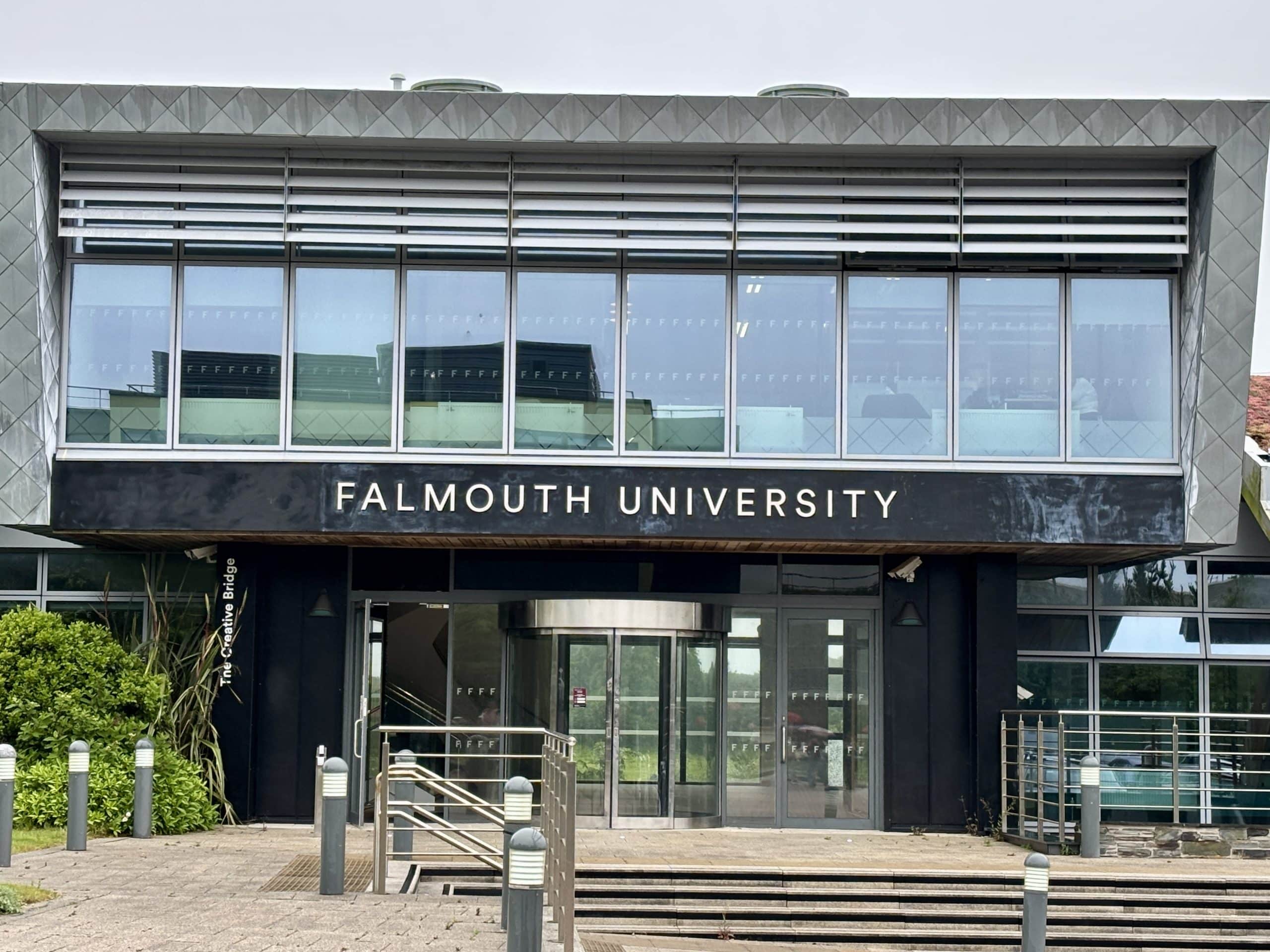
Picture a small, coastal art school in Cornwall, England, where students figure out how to build furniture, style a photo shoot, or design a costume for film, all before they’ve decided what to major in. That’s Falmouth University, and if your student dreams of a creative career but wants a more focused, hands-on education than a typical US university offers, read on to learn more.
About Falmouth University
The university itself traces back to 1902, when it opened as a School of Art. With roughly 5,000 students total, Falmouth stays small and focused on purpose, rather than trying to be everything to everyone.
What actually sets this school apart is its guiding philosophy: “Creativity in Everything.” Every program, every studio, every course points back to the same core belief: that students create best when they feel safe, supported, and connected to a community. The university leans into independent thinking and collaboration, because as they’ll tell you, nobody in the creative industry works alone. Students collaborate across their own courses, across departments, and even across universities.
Sustainability runs through the culture here too. Falmouth positions its students as part of a global community, and that shows up again and again in coursework, particularly in architecture and design, right down to a campus dining policy that skips meat one day a week.
Two Campuses, Two Different Experiences
Falmouth operates across two campuses, and where your student lands depends on their program.
- Penryn Campus is the larger of the two, and it’s shared with the University of Exeter, which means your student gets access to a shared sports center, student union, and a wider range of clubs and societies than a small art school could offer on its own. It’s also strikingly green, with gardens, a small greenhouse, and even a working farm on site. This is where you’ll find the Fashion and Textiles Institute, the Games Academy, the Institute of Photography, the School of Film and Television, the Academy of Music and Theatre Arts, and the Cornwall Business School.
- Falmouth Campus (also called Woodlane) is the original site, and it’s home to Falmouth School of Art, the School of Communication, and the School of Architecture, Design and Interiors. About a third of Falmouth’s students study here.
That shared campus setup at Penryn is important. It gives Falmouth students the intimacy of a small, specialized school alongside the resources and social scene of a larger university. And on both campuses, I noticed how open and light-filled the buildings felt, full of plants and natural light.
Location
Falmouth sits in one of the most scenic corners of the United Kingdom, right along the water. In fact, the town is home to the world’s third largest natural harbor. It has drawn British vacationers for generations, thanks to its coastline, its cozy cafes, and a packed calendar of local events, from beer and food festivals to sailing regattas and sea shanty celebrations.
With rolling hills, quiet water, and a cluster of cafes and shops, the town itself reminded me so much of Southern California that I half expected to run into a surfer on my way to campus; think Del Mar or Encinitas, just with a British accent and considerably colder water.
One practical note for planning purposes: getting to Falmouth takes some effort. It’s roughly a five hour train ride from London, so this isn’t a school your student pops home from on a whim, which is worth factoring into how you think about visits and breaks.

Academics Built for Creative Careers
Falmouth’s academic model favors small, close-knit cohorts over large lecture halls. The average class size is 18 students. Students learn from each other’s work, not just from tutors, and that mix of backgrounds and interests is part of the point.
Across departments, instructors are typically working professionals who are still active in their industries, which means your student is learning from people who understand where the field is headed right now, not just where it’s been.
Academic Programs Worth a Closer Look
Falmouth organizes its creative disciplines into a few standout institutes and schools. Beyond the three I’ll go deep on below, Falmouth also runs a Games Academy, a School of Film and Television, an Academy of Music and Theatre Arts, and a Cornwall Business School, so if your student’s creative interests lean toward gaming, film, or performance, there’s likely a home for them here too.
Institute of Photography
This is Falmouth’s flagship program, and for good reason: it’s the largest photography institute in Europe, and Falmouth is widely considered the continent’s leader in the field. Students choose from four BA (Hons) tracks:
- Commercial and Social Media Photography
- Documentary and Editorial Photography
- Marine and Natural History Photography
- Photography
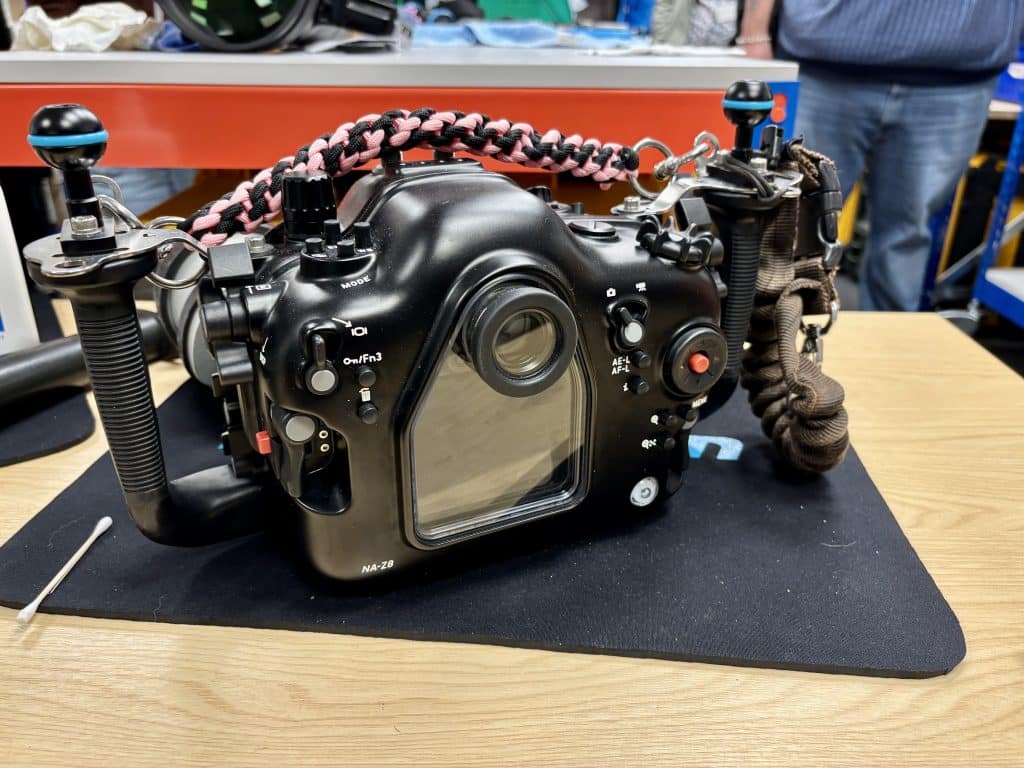
Students also have the option to take a Professional Placement, essentially a structured gap year built into the degree, giving them real industry experience before graduation. The program is backed by roughly £3.5 to £4 million in equipment and one of the best studios in Europe, one large enough that a full-sized bus can drive right into it.
Fashion Design and Textiles Institute
This institute covers a wide range of paths, including Fashion Design, Fashion Marketing, Fashion Photography, Fashion Styling & Art Direction, Textile Design, and Costume Design for Film & Television.
A few details worth knowing:
- Falmouth’s Textile Design course is considered one of the strongest in the UK.
- The Costume Design for Film and Television track is a genuine standout: it’s the only costume design course in the country built specifically around film and TV, rather than theatre, which is where most programs focus.
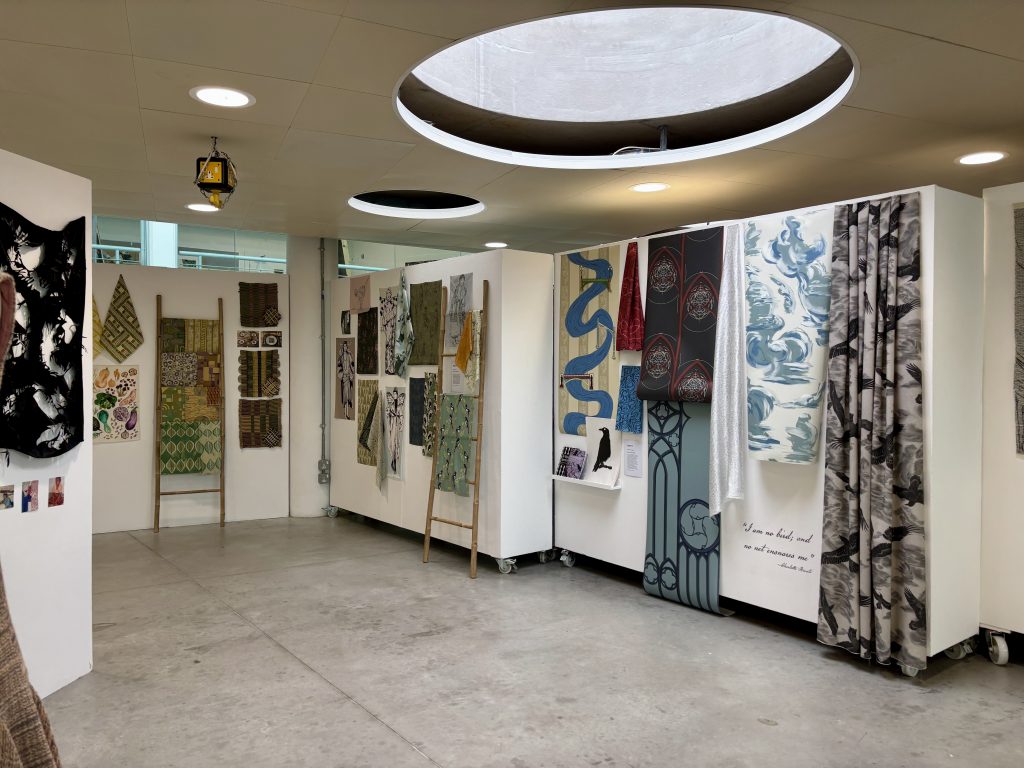
- Teaching here is object-based, meaning students learn by working with the real pieces. The program draws on an archive of more than 5,000 garment and textile pieces dating back to 1850, plus a working wardrobe store of about 4,000 costume pieces.
- First-year students also take a module in anthropology, which might sound like an unusual pairing, but it’s designed to help them understand why people choose the clothes they wear in the first place, a foundation that shapes everything they design afterward.
- The Fashion Photography track is conceptual, meaning it leans more toward artistic vision than commercial technique.
- Falmouth partners with the Circular Textile Foundation and various NGOs, reinforcing that sustainability thread that runs through the whole university.
- Students in Costume Design have access to a working studio, and the staff teaching the program are currently active in the costume industry, not just academics who used to be.
School of Architecture and Design
This school houses Product Design, Interior Design, Interior Architecture, and Architecture, and it’s one of the more flexible entry points at Falmouth. First year students don’t have to know yet whether they’re drawn to Architecture or Design; the program is built to let students explore.
The studio culture here emphasizes collaboration over competition, and sustainable design is embedded into every course. Students are taught to see themselves as part of the solution to climate change, not bystanders to it.
Undergraduate program highlights include:
- BA Architecture: A demanding path that asks students to think beyond simply designing new buildings. With architecture as a profession facing real scrutiny around climate impact, Falmouth pushes students to consider how existing buildings can be reused and reimagined, not just replaced.
- BA Architectural Design Technology
- BA Interior Architecture: Described by Falmouth as the more political of the two design paths. As a rule of thumb, students drawn to historic buildings tend to lean Interior Architecture, while students drawn to color theory tend to lean Interior Design.
- BA Interior Design: Small cohorts (around 35 students), strong collaborative focus, with on campus work centered on retail, hospitality, and some residential design. The online version of this program has a different focus and structure.
- BA Product Design: Modules cover Creativity and Communication, Life Cycle Thinking, Inclusive Design, Circular Economy, and Design Futures.
Admission Requirements
Falmouth’s application expectations vary somewhat by program, and not every detail (like a published GPA threshold or standardized testing policy) has been released publicly. Here’s what I can confirm from direct conversations with the university:
| Program | What They Look For | Notes |
| Architecture | Portfolio of 10 pages of work; personal statement should address how the student sees themselves contributing to climate change solutions | High school diploma required |
| Photography | Personal statement should reference contemporary, working photographers, not only historical figures like Ansel Adams | High school diploma required |
| All programs | Strong portfolio and personal statement generally expected across creative disciplines | Application process described as supportive throughout |
Campus Life
Life at Falmouth looks different depending on which campus your student calls home. At Falmouth Campus (Woodlane), the focus is tight-knit and studio-centered, since it houses Architecture, Design, Art, and Communication. At Penryn, students get that same close community but with access to the University of Exeter’s clubs, societies, sports center, and student union, giving Falmouth students a broader social world without losing the small school feel in their coursework. The town of Falmouth itself adds to the experience too, with a lively calendar of local events.
Falmouth doesn’t run its own varsity athletics program the way many American universities do. Instead, students who want organized sports or recreation tap into the shared Exeter facilities at Penryn.
Student Support
This is where Falmouth stands out for international families. International students are assigned a named advisor, and the support network goes further than that. Students have direct access to directors, peers, and Celestine, who students affectionately call the “Campus Mum,” along with Joe Fountain, who works specifically with international students. That’s a level of personal, named support that’s rare to see spelled out this clearly, and it tells you something about how seriously Falmouth takes the transition for students coming from abroad.
Demographics
International students make up about 15% of Falmouth’s population, with Indian and Chinese students representing the largest groups, followed by students from the US.
Financial Information
Falmouth offers scholarships, though it’s important for families to know two key details: these scholarships are not stackable, and they apply only to the first year of study. That means your student’s financial planning should account for full tuition in years two and beyond, not an ongoing discount.
Special Opportunities
Beyond the classroom, Falmouth builds in several standout opportunities:
- A Professional Placement (essentially a structured gap year) within the Photography program
- Four funded PhD placements within the School of Architecture and Design
- Active partnerships with organizations like the Circular Textile Foundation
- Deep industry connections across photography, fashion, and design that open doors before graduation
Is Falmouth University Right for Your Student?
Falmouth makes the most sense for a student who already knows creativity is central to who they are, but who might not have every detail of their career path figured out yet. If your student lights up talking about photography, fashion, architecture, or design, and if they’d thrive in a small, hands-on, studio-based environment, Falmouth is worth serious consideration. It’s also a strong fit for families who value structured international support, since the advising system here is more personal than what you’ll find at many larger universities abroad.
Conclusion
Falmouth University isn’t for every student, but for the right creative mind, it offers something genuinely rare: small cohorts, working professionals as instructors, a sustainability-focused curriculum, and a support system that puts real people behind the promise of “we’ve got you.” If your student has been dreaming of studying abroad, Falmouth University for American students deserves a spot on your list. As always, I’m here to help you figure out if it’s the right fit for your student’s goals.
Frequently Asked Questions
Is Falmouth University a good fit for American students?
Yes, particularly for students drawn to photography, fashion, or design who want small class sizes and hands-on training. Falmouth has a dedicated international support team, though families should note that the foundation year option isn’t available to US applicants.
What is Falmouth University known for?
Falmouth is best known for its Institute of Photography, the largest of its kind in Europe, along with strong programs in fashion design, textiles, and architecture and design.
Do Falmouth students need to declare a major right away?
Not in every program. In the School of Architecture and Design, first-year students don’t have to decide between Architecture and Design tracks immediately, giving them room to explore before committing.
How does Falmouth support international students?
International students are paired with a named advisor and have direct access to a dedicated international support team, including staff who focus specifically on the needs of students coming from abroad.
Ready to talk through whether a unique, student-centered school like Falmouth belongs on your student’s list?Book a Strategy Session and let’s map out the right path together.
Check out other UK universities with strong creative programs:
Goldsmiths University
Liverpool Institute for Performing Arts
Leeds Arts University
Trinity Laban University